In March, two groups of 5 seniors each joined a storytelling workshop organised in two of ISRAA nursing homes, located nearby the city centre of Treviso (Italy).
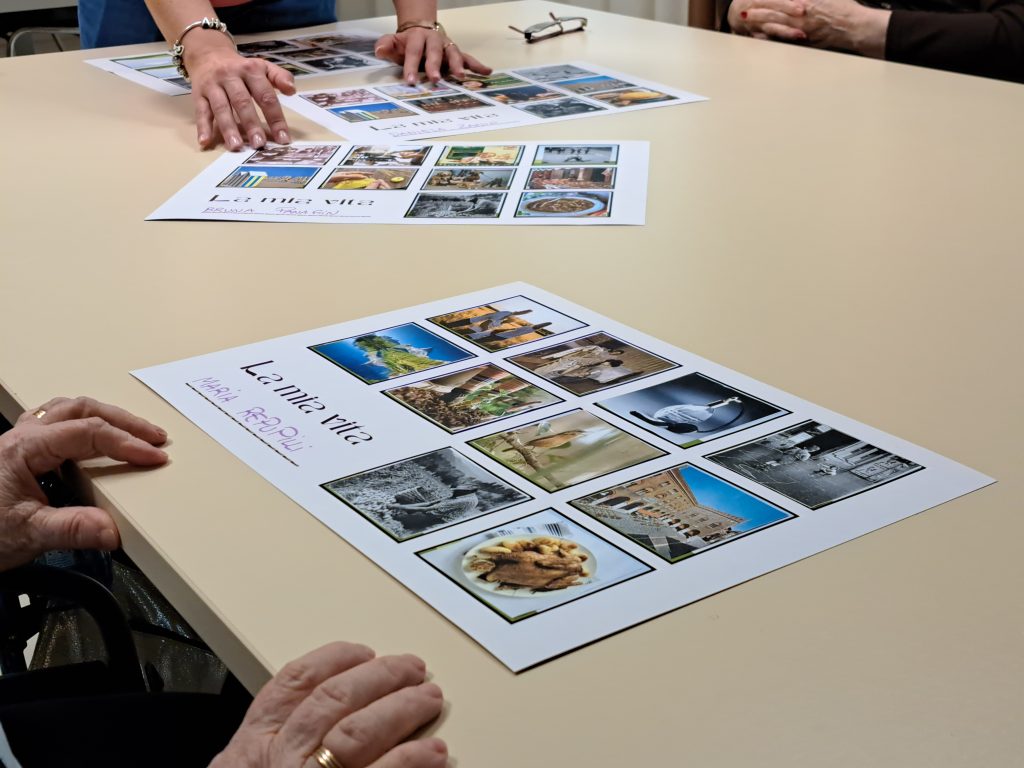
On that occasion, the storytelling methodology was adopted in the form of mood boards, through which seniors were given the chance to recall and share stories and moments of their lives. Among the participants, only two out of ten were men and the average age was around 85 years old. The workshop was held by two educators that were already trained on these methodologies within the ITOSA project.
Description
At the time of organising this activity, storytelling had already been used as a method in previous activities, but never in the form of mood boards, which seemed to be a new, nice and stimulating activity to do with seniors. Educators working in our nursing homes were fundamental to identify the groups of seniors who could be engaged in this activity and in adapting the activity itself to their capacities and interests.
Thus, we managed to find a core storytelling topic “My Life” and agreed on using 10 symbolic subtopics through which seniors could recall and tell moments of their lives. Among the subtopics, there were family, work, self-care, games, travels, hobbies, pets, urban life, countryside life, and food. For each of these subtopics, seniors were given 5 symbolic images from which they could choose the most representative one for them. The goal was to create a mood board out of these images on a personalised paper-based poster. During the workshop, the educator would manage the discussion tackling one subtopic at a time, so that everyone could share their thoughts and memories.
Seniors were enthusiastic about this activity, they enjoyed having the possibility to share their stories in a group and be listened to. They felt that the images could evoke powerful memories and emotions in them, by recalling them the feeling of staying together in their families, enjoying big Sunday lunches with their relatives, the taste of a shared meal, the wait for the festive days to wear the few best clothes they had, the way they used to play with their children and love for the pets they had during their youth.
The workshop was similarly very appreciated by the educators as well, since it was an occasion for them to get to know the seniors they care for in a more profound way. Also, it was helpful for them to test if the materials used were fit for purpose, and indeed they found that it is better for the future to print bigger images, perhaps reducing the number, and to pay more attention to the selection of some of them, to ensure an equal gender representation.
Follow-up
In some cases, the mood boards were also framed and hung on the wall in seniors’ bedrooms with specific captions on what they told during the workshop in relation to the images they had selected. In this way, they can still recall what the workshop evoked, and it is also a nice way for showing their work to their relatives. Considering the success of this workshop, educators are very likely to propose it in the future again, perhaps with new topics and groups of seniors.